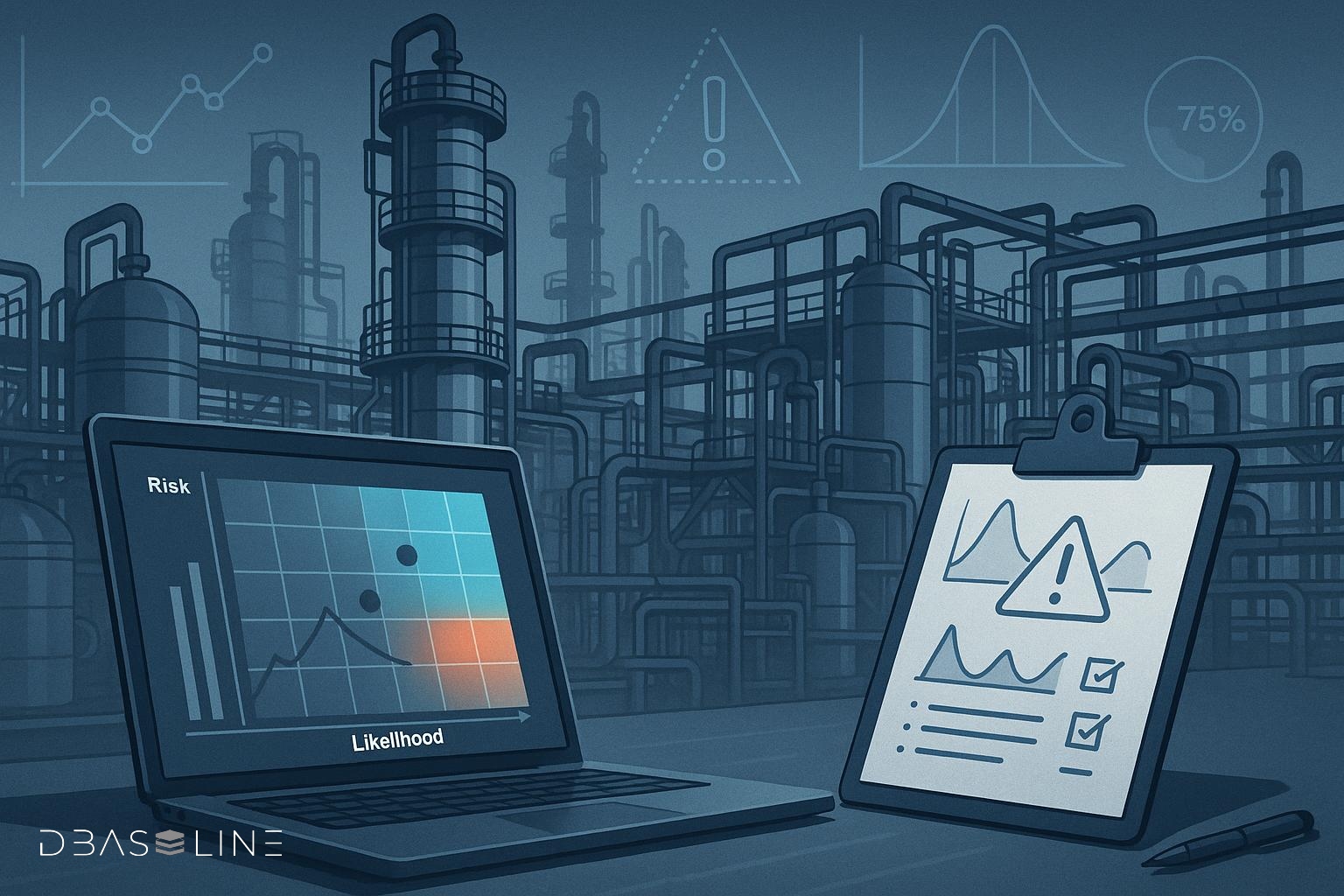
Safety in hazardous industrial facilities is of utmost importance, given the complexity and inherent risks of these environments. Quantitative Risk Analysis (QRA) emerges as an essential tool to identify, assess, and mitigate potential hazards, ensuring operational integrity and the protection of workers and surrounding communities.
What is Quantitative Risk Analysis (QRA)?
QRA is a systematic approach that quantifies the probability and consequences of hazardous events in industrial facilities. Unlike qualitative analyses, QRA provides numerical data that allow for a more precise understanding of risks, facilitating informed decision-making regarding mitigation measures and safety investments.
Common QRA Methodologies
QRA methodologies generally involve the following steps:
- Hazard Identification: Recognizing potential sources of risk, such as leaks of toxic or explosive substances.
- Frequency Analysis: Determining the likelihood of occurrence for each hazardous event.
- Consequence Analysis: Assessing the potential impacts of each event, including human, environmental, and material damages.
- Risk Estimation: Combining frequency and consequence analyses to calculate the total risk associated with each identified hazard.
Practical Applications of QRA
The application of QRA is broad and spans various industrial sectors. For example, in the petrochemical sector, QRA is used to assess risks associated with the storage and transportation of flammable substances. A study published in March 2024 applied a semi-quantitative risk analysis to a petroleum production unit, highlighting the importance of methods like Layers of Protection Analysis (LOPA) to quantify data after qualitative analyses such as HAZOP. Source
Case Study: QRA in a Thermal Power Plant
A practical example of QRA application is the study conducted at Sembcorp's 2x660MW thermal power plant located in Nellore, India. The analysis focused on critical systems such as Heavy Fuel Oil (HFO), Diesel (HSD), Acid and Alkali, and Hydrogen. The objective was to identify major hazards, calculate the physical effects of potential failures, and evaluate failure frequencies to quantify societal risk and estimate potential loss of life. The resulting recommendations were implemented to ensure all risks were within the ALARP (As Low As Reasonably Practicable) principle. Source
Recent Statistical Data
According to the U.S. Bureau of Labor Statistics, in 2024, there were 2,488,400 cases of nonfatal injuries and illnesses in private industry, with 888,100 cases involving days away from work. These numbers underscore the ongoing need for rigorous risk analyses to reduce incidents and improve workplace safety. Source
Conclusion
Quantitative Risk Analysis is an indispensable tool for risk management in hazardous industrial facilities. Its application allows for a deep understanding of risks, facilitating the implementation of effective mitigation measures and contributing to operational safety and the protection of human lives. Companies that invest in QRA demonstrate a commitment to excellence in safety and the sustainability of their operations.