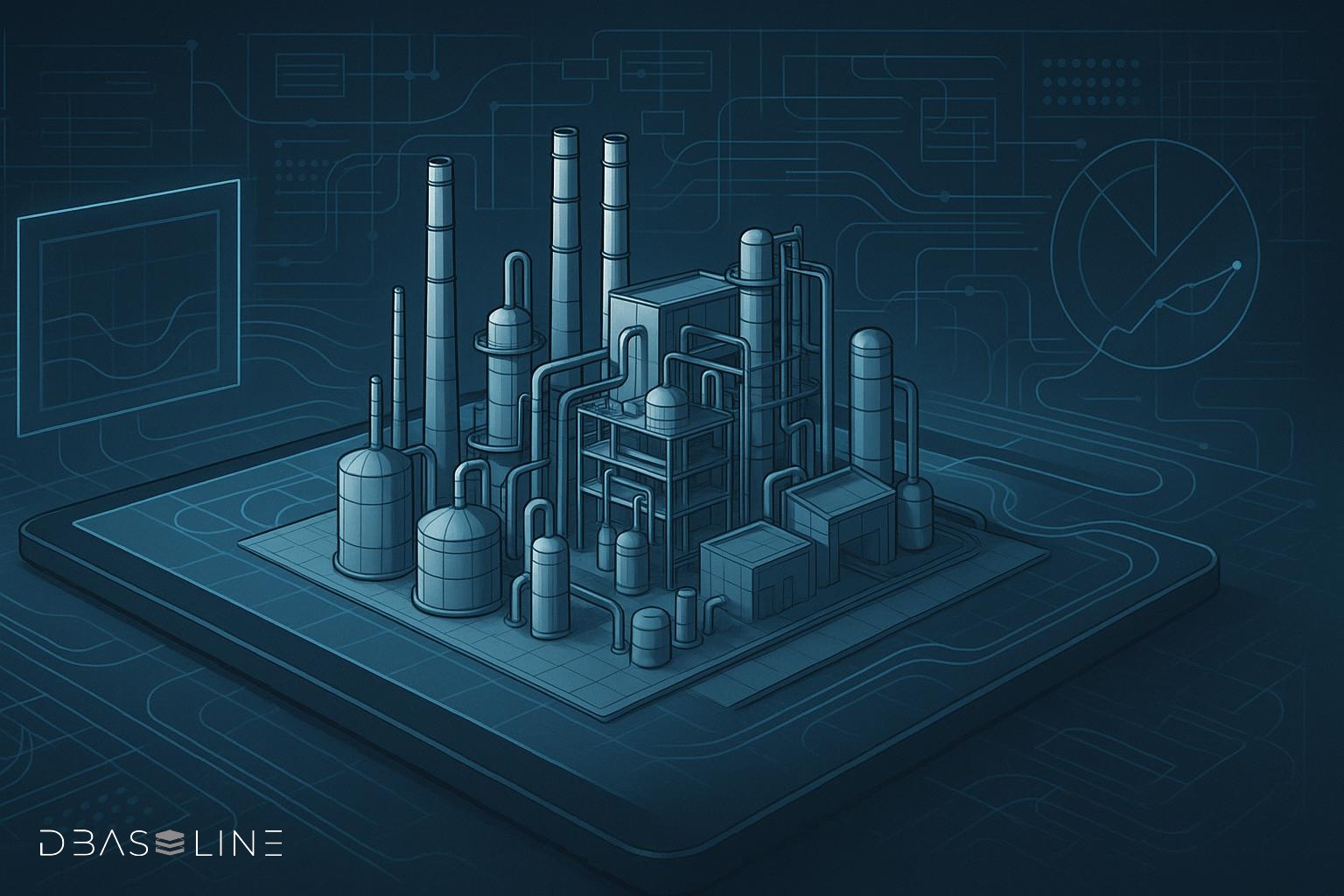
Building Information Modeling (BIM) has revolutionized the way industrial projects are conceived, executed, and managed. Understanding BIM maturity levels, associated workflows, and strategies for efficient asset delivery is crucial to maximizing the benefits of this methodology.
BIM Maturity Levels
BIM maturity levels reflect the degree of collaboration and digitization in construction projects. They are generally classified into four stages:
Level 0: No Collaboration
Characterized by the use of 2D drawings without collaboration between disciplines. Information is shared through physical or non-integrated digital documents.
Level 1: Partial Collaboration
Involves the use of 3D models for design and 2D drawings for documentation. CAD standards are established, but collaboration between disciplines is still limited.
Level 2: Full Collaboration
All participants use individual 3D models, but not necessarily a shared model. Collaboration occurs through standardized information exchange between parties.
Level 3: Full Integration
Represents total integration, where a shared model is used by all disciplines, allowing real-time collaboration and integrated project lifecycle management.
BIM Workflow in Industrial Projects
An efficient BIM workflow in industrial projects generally follows these steps:
1. Planning and Objective Definition
Establishing clear goals for BIM implementation, including the required Levels of Development (LOD) and standards to be followed.
2. Model Development
Creating 3D models that incorporate geometric and non-geometric information, covering architecture, structure, and installations.
3. Coordination and Clash Detection
Using software to identify and resolve interferences between disciplines, ensuring system compatibility.
4. Documentation Extraction
Generating drawings, schedules, and cost estimates directly from the BIM model, ensuring consistency and accuracy.
5. Construction and Monitoring
Using the BIM model to guide construction, with continuous updates to reflect progress and any changes.
6. Delivery and Operation
Providing the finalized model to the client, which can be used for operations, maintenance, and future modifications.
Asset Delivery with BIM
Asset delivery in industrial projects using BIM offers several benefits:
- Accuracy and Completeness: The BIM model provides an accurate representation of assets, including detailed specifications and maintenance data.
- Ease of Information Access: All relevant information is centralized, facilitating access and asset management.
- Integration with Management Systems: The model can be integrated with asset management systems, allowing efficient monitoring and maintenance.
Case Study: BIM Implementation in Cement Factory
A notable example of BIM application in industrial projects is the case of Citic Heavy Industries, which used collaborative BIM technologies to deliver a smart and sustainable cement factory. The implementation resulted in an 80% reduction in design changes, $3 million in project cost savings, and a $2 million reduction in equipment maintenance costs. Additionally, the factory reduced electricity consumption by 3.5 million kWh, generating an estimated annual savings of $1.24 million. Source
Conclusion
The adoption of BIM in industrial projects, with an understanding of maturity levels, implementation of efficient workflows, and appropriate strategies for asset delivery, can lead to significant improvements in efficiency, cost reduction, and project quality. Companies investing in this methodology are better positioned to face industry challenges and gain competitive advantages.