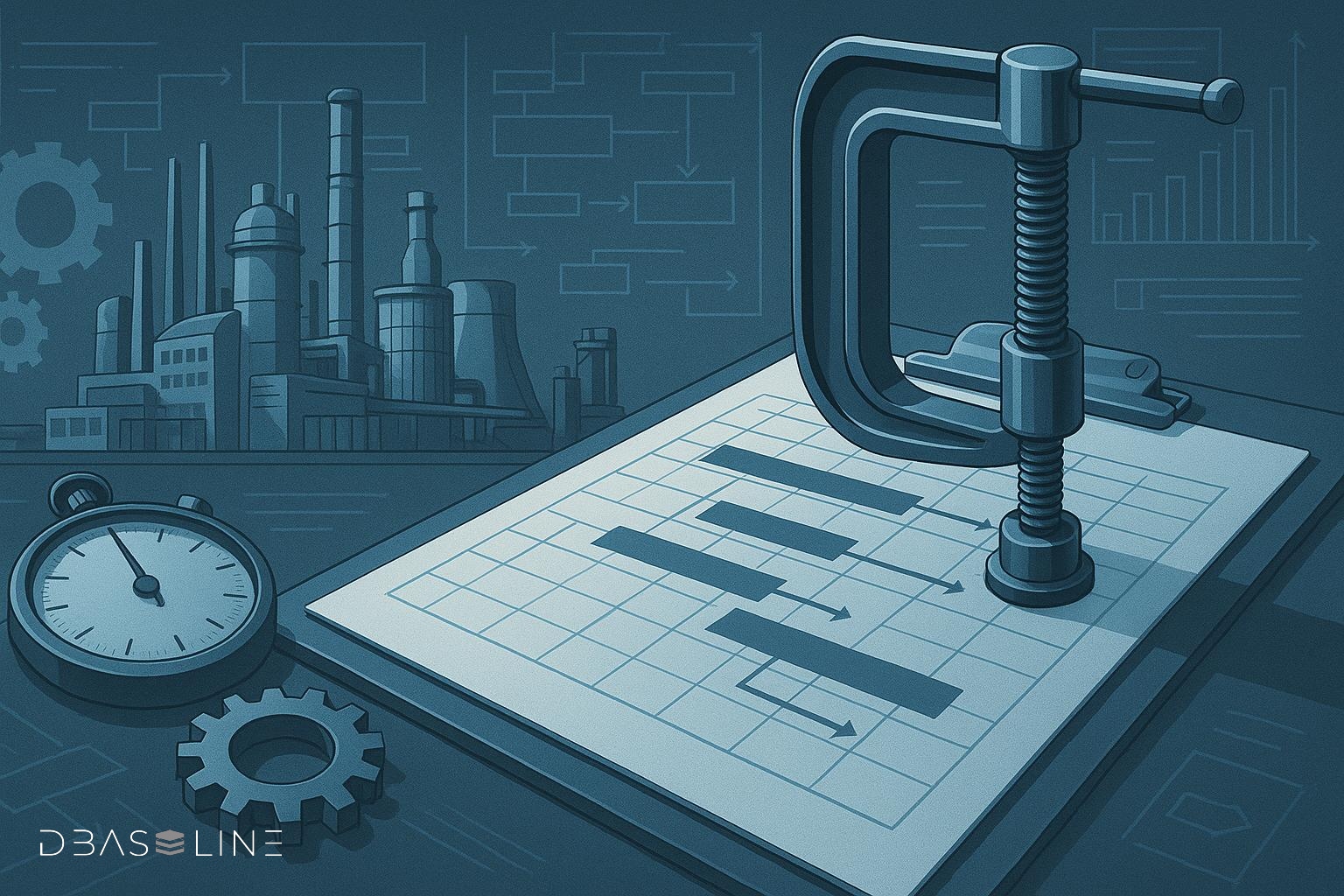
In a highly competitive industrial landscape, the ability to deliver projects within established timelines is crucial. Delays can result in significant additional costs and loss of market opportunities. To mitigate these risks, schedule compression techniques such as fast-tracking and crashing are frequently employed. This article explores these techniques, their practical applications, and presents a recent case study in the industrial sector.
Understanding Schedule Compression
Schedule compression refers to strategies used to reduce the overall duration of a project without altering its scope. The two main techniques are:
Fast-Tracking
Fast-tracking involves executing activities simultaneously that were originally planned to be performed sequentially. This is possible when activities do not have strict dependencies. While this approach can accelerate the schedule, it also increases the risk of rework and errors due to overlapping tasks.
Crashing
Crashing consists of allocating additional resources to critical activities to reduce their duration. This can include overtime, hiring additional personnel, or acquiring supplementary equipment. Although effective, this technique generally results in increased costs and should be applied after a careful cost-benefit analysis.
Practical Applications and Case Study
A study published in 2025 analyzed the impact of schedule compression techniques on a construction project in Basra, Iraq. The project faced significant delays due to logistical challenges and resource constraints. To mitigate these delays, the following strategies were implemented:
- Fast-Tracking: Foundation and structural activities were performed simultaneously, reducing the schedule by 15%.
- Crashing: Additional resources were allocated to critical activities, resulting in an additional 10% reduction in the total project time.
These interventions allowed the project to be completed within the revised timeline, although with an 8% increase in total costs due to the use of additional resources. This case highlights the importance of balancing time reduction with cost increases when applying schedule compression techniques.
Final Considerations
The application of fast-tracking and crashing in industrial projects can be an effective solution to meet tight deadlines. However, it is essential to conduct a detailed analysis to assess the associated risks and costs. The decision to implement these techniques should be based on a clear understanding of activity dependencies, resource availability, and financial impact.
For companies seeking to optimize their industrial project schedules, Dbaseline offers specialized project management consulting, assisting in the implementation of effective schedule compression strategies. Contact us to learn more about how we can support your projects.
Frequently Asked Questions
What are the main risks associated with fast-tracking?
Fast-tracking can increase the risk of rework and errors due to the overlap of activities that were originally sequential. This occurs because simultaneous execution can lead to resource conflicts and lack of adequate coordination.
How to determine if crashing is suitable for a project?
The decision to apply crashing should be based on a cost-benefit analysis, considering the urgency of the deadline, the availability of additional resources, and the financial impact of increased costs in relation to the benefits of completing the project more quickly.
Is it possible to combine fast-tracking and crashing in the same project?
Yes, it is possible to combine both techniques to maximize schedule reduction. However, this approach requires careful management to balance the increased risks of fast-tracking with the additional costs of crashing.