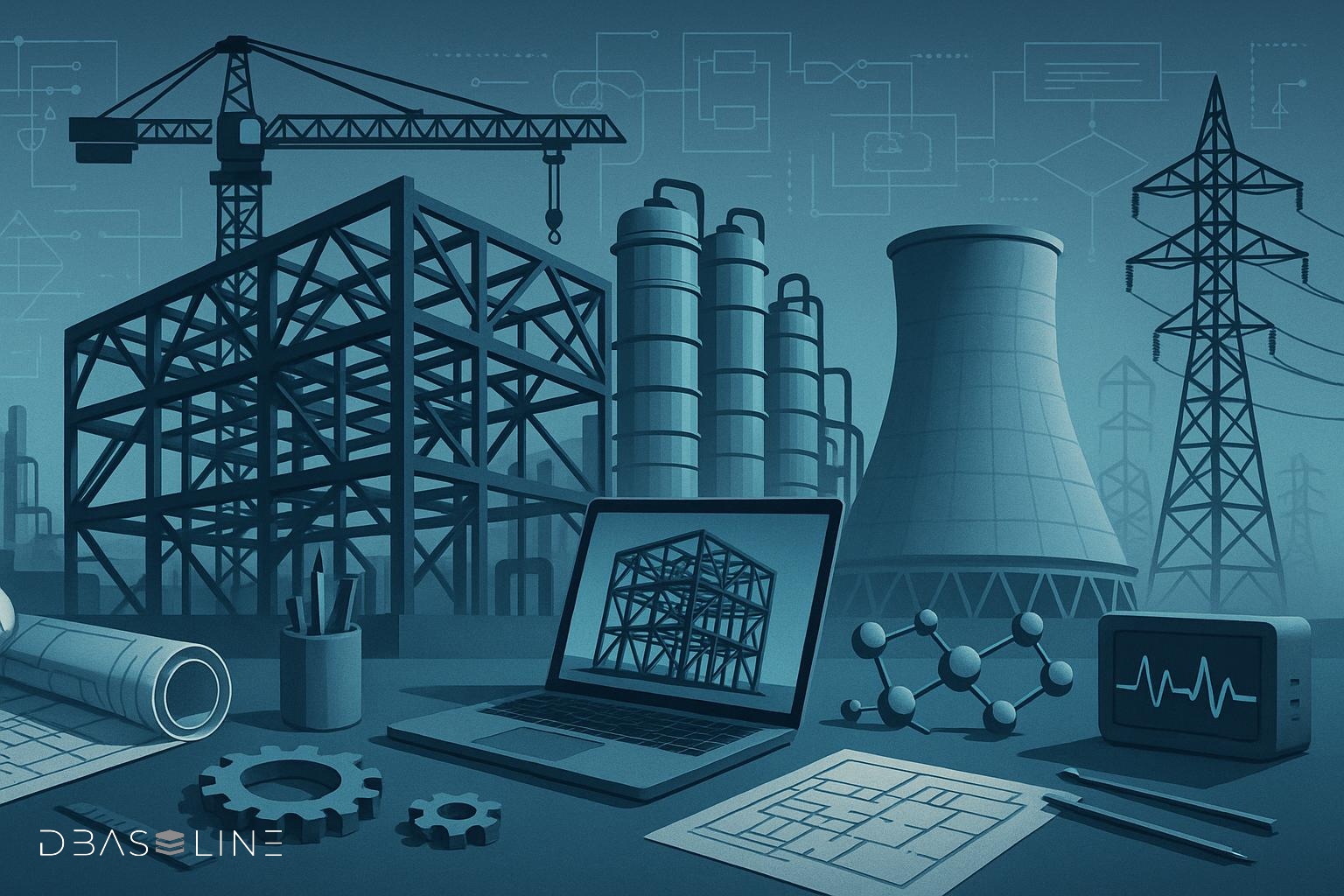
In complex industrial projects, effective management of interferences and conflicts is crucial to ensure efficiency, safety, and profitability. The integration of multiple disciplines, such as civil, electrical, mechanical, and automation, increases the likelihood of occurrences that can compromise schedules and budgets. This article discusses strategies to identify, mitigate, and resolve these issues, highlighting the importance of project compatibility and the use of technologies like Building Information Modeling (BIM).
Identification of Interferences and Conflicts
Interferences in industrial projects occur when elements from different disciplines occupy the same physical space or when there are functional incompatibilities between systems. Conflicts can arise due to communication failures, overlapping activities, or disagreements between teams. Early identification of these issues is essential to avoid rework and delays.
Main Causes of Interferences
- Lack of integration between disciplines: Projects developed in isolation can result in incompatibilities.
- Deficiencies in planning: Poorly developed schedules can lead to undesirable overlaps of activities.
- Ineffective communication: Failures in information exchange between teams increase the risk of conflicts.
Mitigation Strategies
To minimize interferences and conflicts, it is essential to adopt integrated and proactive management practices.
Project Compatibility
Compatibility involves integrating all disciplines into a unified model, allowing the identification and correction of conflicts before the start of construction. The use of technologies like BIM facilitates this process, providing a three-dimensional and detailed view of the project. According to Simetria Engenharia, compatibility using BIM promotes an integrated and collaborative vision, improving communication between teams and optimizing schedules and costs. Source
Use of RFI (Request for Information)
RFIs are effective tools to clarify doubts and resolve potential conflicts during project execution. They allow formal communication between the parties involved, ensuring that issues are addressed in a structured and documented manner. As highlighted by BibLus, a well-formulated RFI should contain a detailed description of the affected area, identification of the components in conflict, and an alternative proposal or request for specific instructions. Source
Real Case: Araçoiaba Prison Complex
A practical example of applying interference management strategies is the construction of the Araçoiaba Prison Complex. In this project, the use of BIM allowed for the early detection of conflicts between different disciplines, resulting in a significant reduction of rework and additional costs. The cost-benefit analysis conducted demonstrated that the investment in conflict detection tools associated with BIM brought substantial advantages to project management. Source
Conclusion
The management of interferences and conflicts in complex industrial projects requires an integrated approach that combines detailed planning, project compatibility, and effective communication. The adoption of technologies like BIM and the use of tools such as RFIs are fundamental to identify and resolve issues before they negatively impact the project. Companies that invest in these practices not only reduce risks and costs but also ensure the delivery of projects within established deadlines and quality standards.
Frequently Asked Questions
What is project compatibility in industrial projects?
It is the process of integrating all disciplines involved in a project, such as architecture, structure, and installations, into a unified model, aiming to identify and correct conflicts before the start of construction.
How does BIM assist in interference management?
BIM allows the creation of detailed three-dimensional models that facilitate the visualization and early detection of conflicts between different disciplines, reducing rework and additional costs.
What is the importance of RFIs in industrial projects?
RFIs are essential to formalize doubts and resolve potential conflicts during project execution, ensuring clear and documented communication between the parties involved.