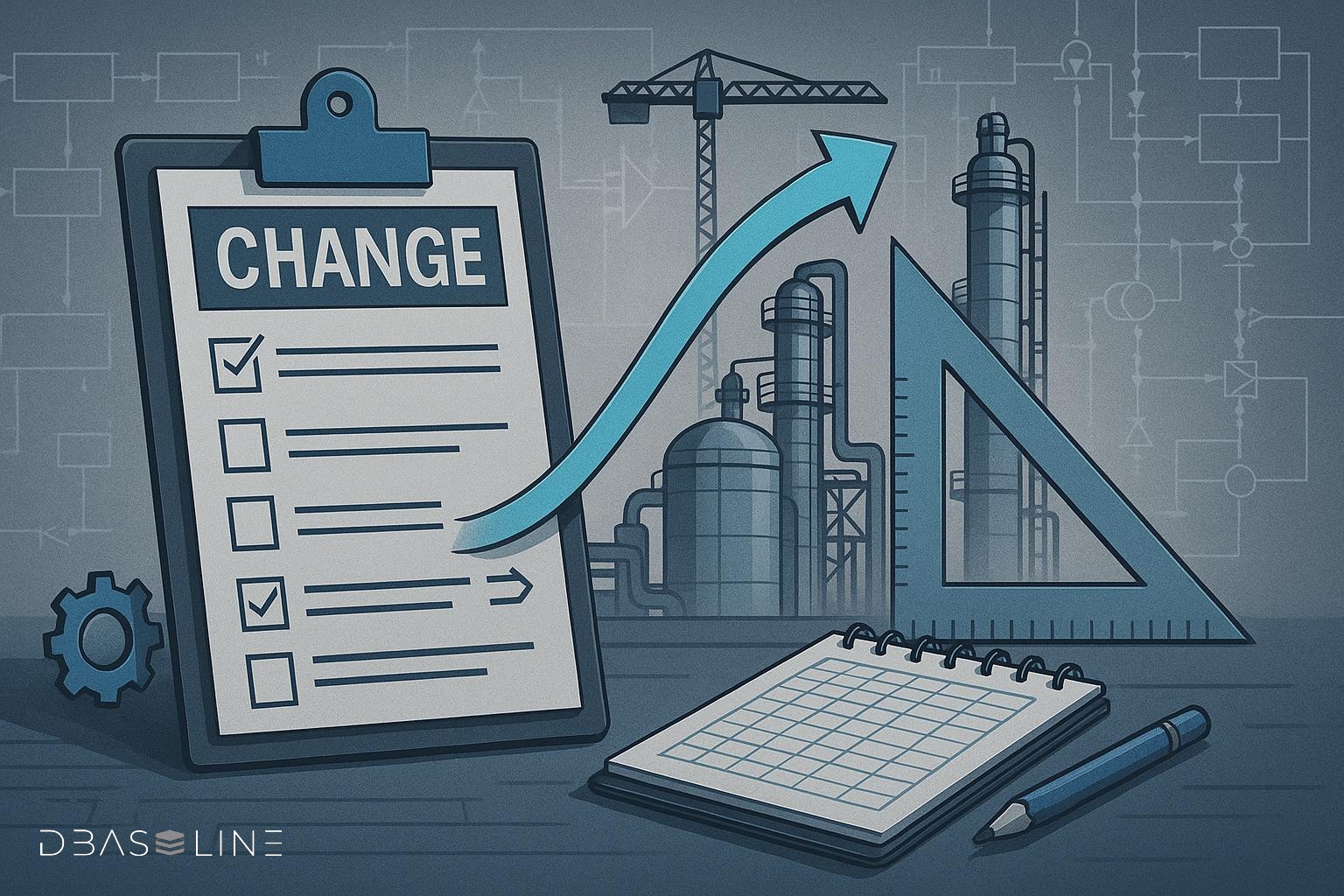
In Engineering, Procurement, and Construction (EPC) projects, effective management of scope changes and claims control are crucial for the success of the enterprise. Uncontrolled changes can result in significant delays, increased costs, and contractual disputes. This article explores strategies for managing scope changes and controlling claims, illustrating with real cases and concrete data.
Importance of Scope Change Management in EPC Projects
Scope change management involves identifying, evaluating, and implementing changes in project requirements in a controlled manner. In EPC projects, where multiple stakeholders and technical complexity are common, scope changes can arise due to:
- Design revisions;
- Discoveries during construction;
- Changes in client needs;
- Compliance with new regulations.
Strategies for Managing Scope Changes
1. Establishment of Formal Change Control Processes
Implementing a structured process for requesting, evaluating, and approving changes is fundamental. This includes:
- Detailed documentation of change requests;
- Assessment of impacts on cost, schedule, and quality;
- Formal approval by relevant stakeholders.
As highlighted in the Praxis Framework, a rigorous change control procedure is essential in all projects, programs, and portfolios, allowing stakeholders to present their suggestions. A typical procedure includes identification, impact analysis, evaluation of alternatives, and joint decision-making. Source
2. Use of the Work Breakdown Structure (WBS)
The WBS breaks down the project into smaller components, facilitating the identification of areas affected by changes and allowing for more precise scope control. A case study published in the South American Development Society Journal demonstrates that the analytical and illustrative use of the WBS can improve project control and quality, highlighting ease of interpretation and reduced error levels. Source
3. Transparent Communication with Stakeholders
Keeping all parties informed about possible changes and their impacts promotes alignment and reduces resistance. Effective communication is essential for project success.
Claims Control in EPC Projects
1. Rigorous Documentation
Maintaining detailed records of all communications, decisions, and project changes is essential to substantiate or contest claims. Lack of adequate documentation can hinder dispute resolution.
2. Application of Earned Value Methods
The use of earned value methods allows monitoring project performance and identifying deviations that may lead to claims. A study published in the Engineering Management Journal highlights that earned value can provide justifications for claims related to cost adjustments and scope changes, being consistent with legal standards to substantiate cost claims. Source
3. Proactive Dispute Resolution
Establishing mechanisms to resolve disputes quickly, such as mediation or resolution committees, can prevent escalation to litigation. Proactive dispute resolution is fundamental to maintaining project progress.
Case Study: Furnace Overhaul in a Metallurgical Plant
A case study published in the Revista de Gestão e Projetos analyzed the impact of scope changes during the execution of a furnace overhaul in a metallurgical plant. The main causes identified were:
- Lack of clarity in initial specifications;
- Unplanned design revisions;
- Inadequate communication between parties.
These factors resulted in significant delays and increased costs. The implementation of formal change control processes and improved communication were recommended to mitigate these problems in future projects. Source
Conclusion
Effective management of scope changes and claims control are essential for the success of EPC projects. Implementing formal processes, using tools like the WBS, and maintaining transparent communication are fundamental strategies. Case studies demonstrate that neglecting these aspects can lead to significant negative impacts. For specialized support in managing complex industrial projects, contact Dbaseline.