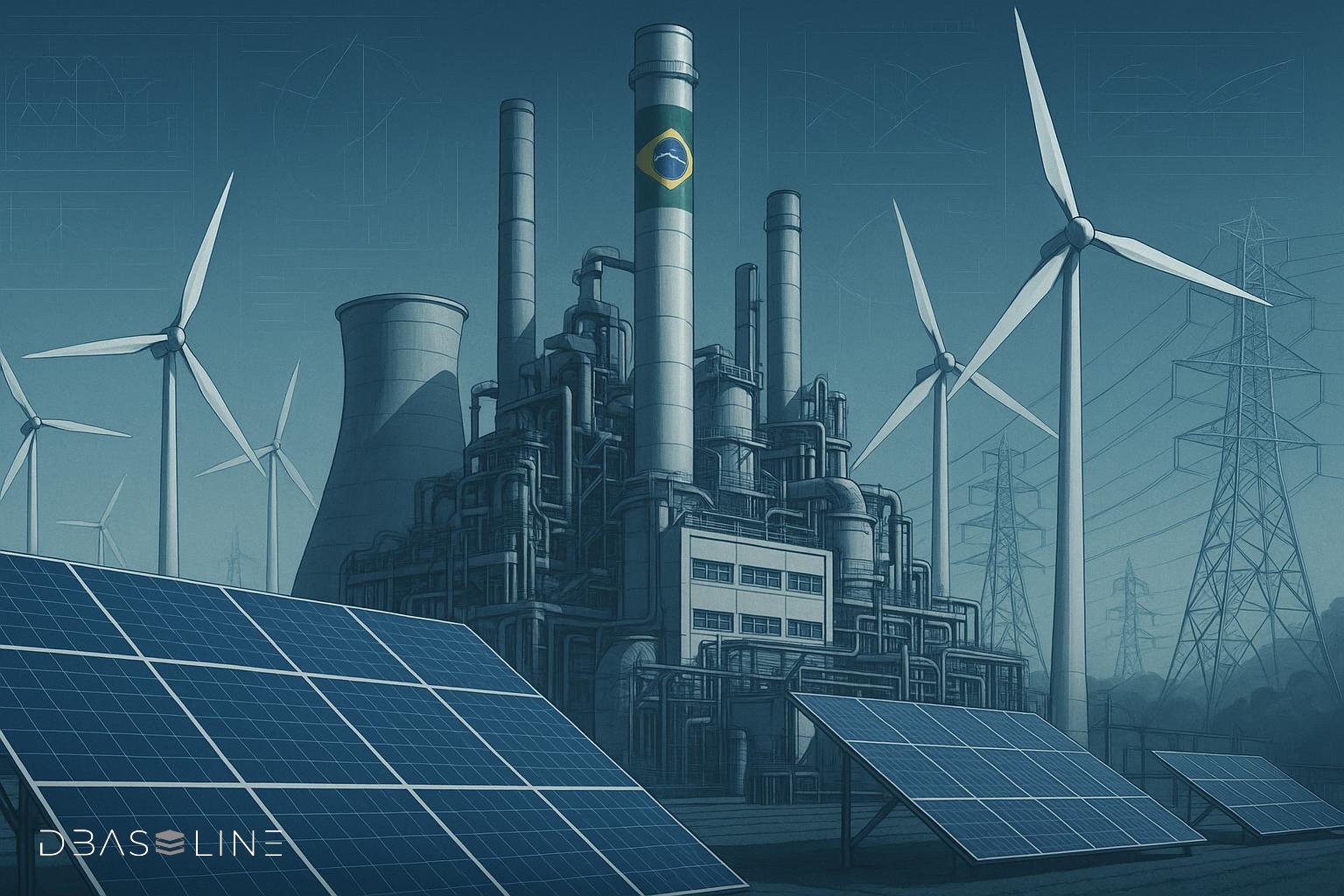
The global energy transition has driven the adoption of renewable sources and the search for sustainable alternatives in the industry. In Brazil, green hydrogen emerges as a promising solution, aligned with decarbonization and energy efficiency efforts.
Current Overview of Renewable Energy in the Brazilian Industry
According to the 2025 National Energy Balance (BEN), the Brazilian industry consumed 64.4% of energy from renewable sources in 2024, maintaining close to the 64.7% recorded in 2023. This performance highlights the industrial sector as a protagonist in the transition to a cleaner energy matrix. Source
Investments in Green Hydrogen
Green hydrogen, produced by water electrolysis using renewable energy, has gained prominence in Brazil. In December 2024, the National Electric Energy Agency (ANEEL) approved 13 projects for the installation of green hydrogen plants, totaling investments of R$ 1.4 billion. Companies such as Petrobras, Neoenergia, and CTG Brasil are leading these initiatives, with implementation expected from 2025. Source
Case: Mendubim Solar Plant and Hydro Alunorte
A concrete example of integration between renewable energies and industry is the Mendubim solar plant in Rio Grande do Norte. With a capacity of 531 megawatts (MW), the plant began commercial operations in 2024 and supplies clean electricity to the Hydro Alunorte alumina refinery in Pará. This project represents one of the largest investments in solar energy for industrial use in Brazil. Source
Future Perspectives
The trend of investments in renewable energies and green hydrogen in the Brazilian industry is expected to intensify in the coming years. The National Confederation of Industry (CNI) revealed that, in 2024, 48% of industrial companies invested in clean energy projects, a significant increase compared to the 34% recorded in 2023. Source
These data indicate a growing commitment of the Brazilian industrial sector to sustainability and decarbonization, positioning the country as a potential leader in the production and use of green hydrogen and other renewable sources.
Conclusion
The advancement of green hydrogen and renewable energies in the Brazilian industry reflects a strategic shift towards sustainability and global competitiveness. Projects like the Mendubim solar plant and the investments approved by ANEEL demonstrate Brazil's potential to lead this energy transformation. For companies seeking to position themselves in this scenario, Dbaseline offers specialized consultancy in industrial implementation engineering, industrial investment management, and complex project management, assisting in the transition to a cleaner and more efficient energy matrix.