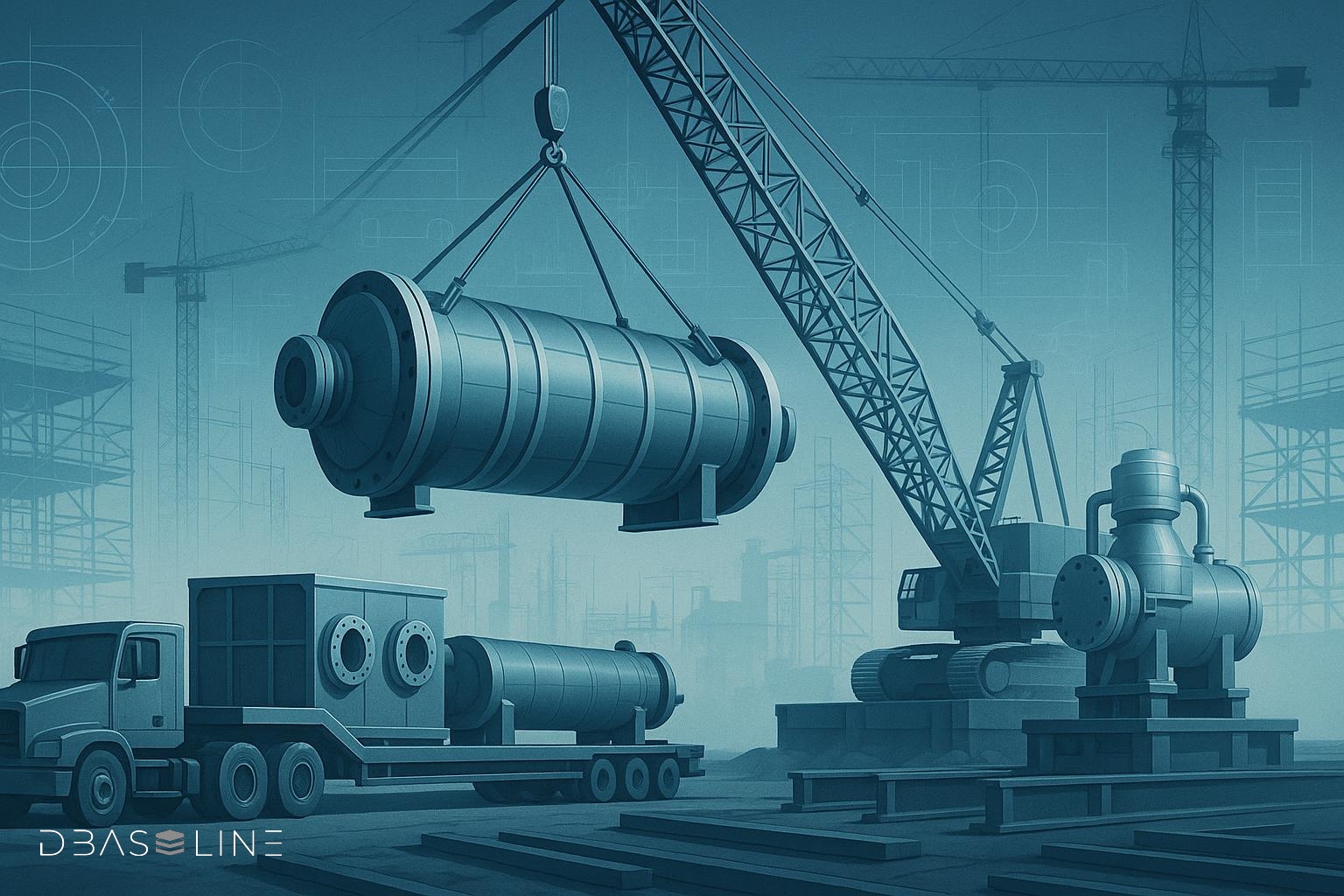
The movement of large industrial equipment is a complex operation requiring meticulous planning, specialized engineering, and precise execution. The success of these operations directly impacts the safety, integrity of the equipment, and productivity of industrial facilities. This article explores best practices and challenges associated with the transportation, assembly, and rigging of large industrial equipment, illustrated with recent case studies.
Planning and Engineering of Movement
Detailed planning is fundamental for the safe and efficient movement of heavy equipment. This includes:
- Initial Assessment and Site Survey: Understanding the dimensions and weight of the equipment, as well as the characteristics of the origin and destination sites.
- Rigging Engineering: Developing lifting plans that consider load distribution, anchorage points, and appropriate lifting equipment.
- Route Analysis: Identifying viable routes, considering height, weight, and width restrictions, and obtaining necessary permits.
Specialized Equipment and Technologies
The use of appropriate equipment is crucial for the movement of heavy loads. Key equipment includes:
- Hydraulic Cranes and Gantries: Used for vertical lifts in confined spaces.
- Self-Propelled Modular Transporters (SPMTs): Allow the transport of extremely heavy loads with high precision.
- Custom Rigging Equipment: Includes slings, chains, and fastening devices specifically designed for each operation.
Case Study: Pipe Rack Module Transportation
In June 2025, Express Global Logistics (EXG) carried out the movement of 33 pipe rack modules at an industrial facility. The largest module weighed 671.4 metric tons and measured 45.6 meters in length, 12 meters in width, and 19.7 meters in height. The operation faced significant challenges, such as navigating confined spaces within the facility. To overcome these obstacles, 48-axle SPMTs were used, allowing precise and safe maneuvers. Source
Common Challenges and Solutions
Operations involving the movement of large equipment often face challenges such as:
- Confined Spaces: Movement in restricted areas requires detailed planning and specialized equipment.
- Infrastructure Restrictions: Bridges, roads, and facilities may not support the weight or dimensions of the load, necessitating reinforcements or alternative routes.
- Regulatory Compliance: Obtaining permits and adhering to local and international regulations are essential to avoid delays and penalties.
To mitigate these challenges, it is essential to:
- Conduct detailed feasibility studies and risk analyses.
- Utilize modeling and simulation technologies to predict and resolve potential issues.
- Maintain constant communication with all involved parties, including local authorities.
Conclusion
The logistics of large industrial equipment is a discipline that combines advanced engineering, strategic planning, and precise execution. The success of these operations depends on an integrated approach that considers all technical, operational, and regulatory aspects. Specialized companies, such as Dbaseline, offer the necessary expertise to ensure that each stage of the process is conducted efficiently and safely, minimizing risks and maximizing productivity.
Frequently Asked Questions
What are the main factors to consider when transporting heavy industrial equipment?
The main factors include the weight and dimensions of the equipment, the infrastructure of transport routes, necessary permits, the choice of appropriate handling equipment, and compliance with local and international regulations.
How can safety be ensured during the assembly of large industrial equipment?
Safety can be ensured through detailed planning, use of appropriate rigging equipment, adequate team training, conducting risk analyses, and implementing strict safety control measures.
What technologies are used in the rigging of heavy equipment?
Technologies such as hydraulic cranes, gantries, SPMTs, load sensors, remote monitoring systems, and modeling and simulation software are commonly used in the rigging of heavy equipment.