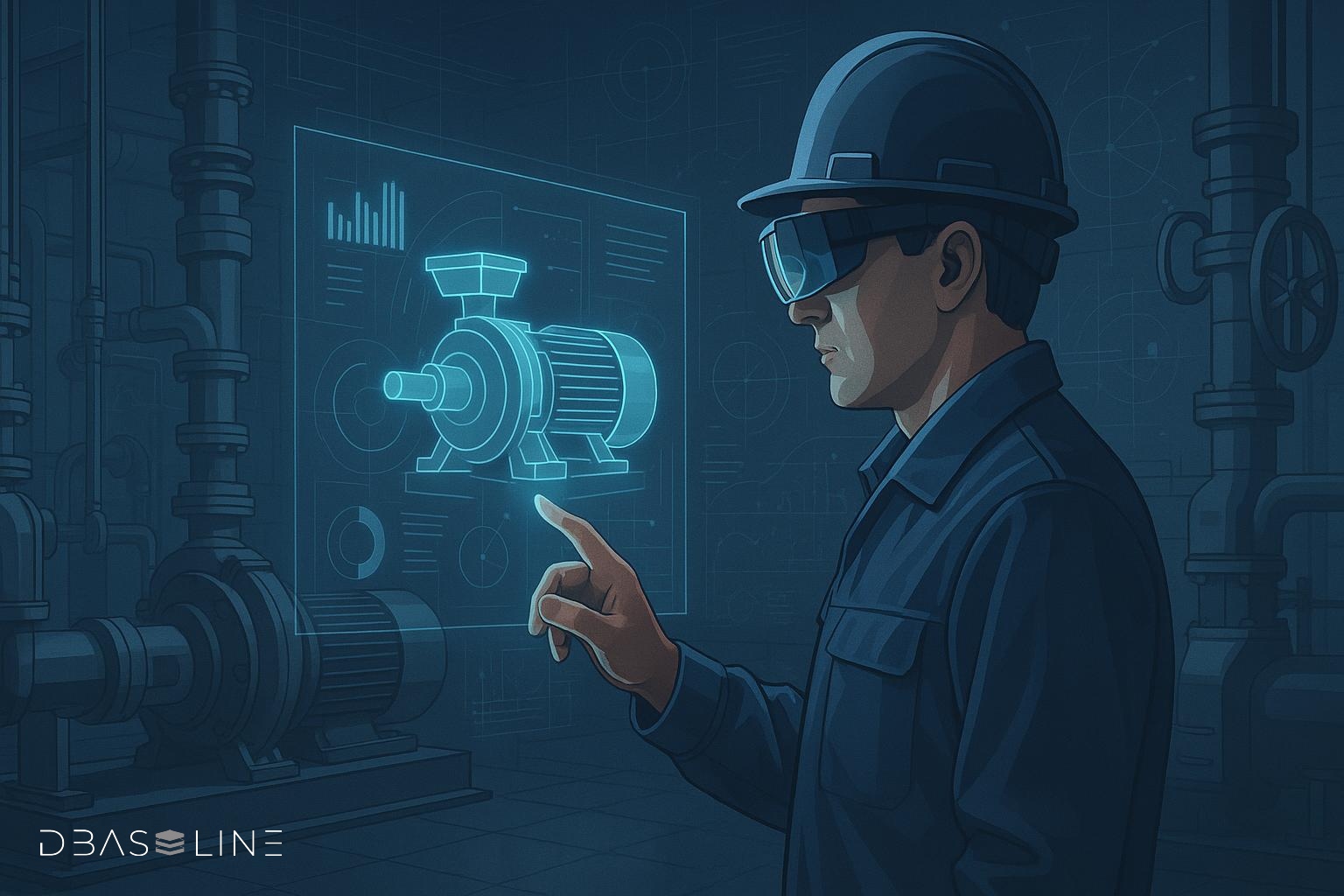
Industrial maintenance constantly faces challenges to increase efficiency, reduce costs, and minimize downtime. The integration of technologies such as Augmented Reality (AR) and Digital Twins has proven to be a promising solution to revolutionize inspection and maintenance processes.
Integration of Augmented Reality and Digital Twins
Augmented Reality allows the overlay of digital information onto the real world, providing technicians with real-time data during maintenance operations. Digital Twins are precise virtual representations of physical assets, continuously updated with operational data. The combination of these technologies offers a comprehensive and interactive view of equipment, facilitating more accurate diagnostics and interventions.
Benefits in Industrial Maintenance
The joint application of AR and Digital Twins brings several benefits to industrial maintenance:
- Reduced Diagnostic Time: Technicians can instantly view critical information about equipment, decreasing the time needed to identify faults.
- Increased Precision in Interventions: Detailed visualization of components and their operational state allows for more precise repairs, reducing errors and rework.
- Training and Capacity Building: New employees can be trained in interactive virtual environments, simulating real scenarios without associated risks.
- Predictive Maintenance: Continuous analysis of operational data enables the identification of patterns that precede failures, allowing interventions before unexpected stoppages occur.
Case Study: Implementation in the Mining Industry
A study published in April 2024 details the application of Virtual Reality-based Digital Twins for remote monitoring of mining equipment. The implementation resulted in a significant reduction in inspection time and increased operator safety by enabling monitoring and fault diagnosis without the need for physical presence on-site. Source
Challenges and Considerations
Despite the benefits, adopting these technologies faces challenges such as:
- Initial Investment: Implementation requires significant investments in hardware, software, and training.
- System Integration: Compatibility with existing systems can be complex and require adaptations.
- Data Security: The collection and transmission of sensitive data require robust cybersecurity measures.
Conclusion
The integration of Augmented Reality and Digital Twins represents a significant advancement in industrial maintenance, offering powerful tools to increase efficiency, reduce costs, and improve safety. Companies investing in these technologies are positioned to gain significant competitive advantages in the market.
Frequently Asked Questions
How does Augmented Reality improve industrial maintenance?
AR provides technicians with real-time information about equipment, allowing for faster and more accurate diagnostics, facilitating training, and reducing errors during interventions.
What are Digital Twins and their role in maintenance?
Digital Twins are virtual representations of physical assets that reflect their real-time state. They enable continuous monitoring, predictive analysis, and simulations to optimize equipment maintenance and operation.
What are the main challenges in implementing these technologies?
The main challenges include high initial investment, complexity in integration with existing systems, and the need to ensure the security of collected and transmitted data.