Introduction
Industrial maintenance is a fundamental pillar to ensure operational continuity and safety in industrial plants. Traditionally, inspections and maintenance are performed manually, which can result in time-consuming processes and human errors. With the advancement of digital technologies, the integration of Augmented Reality (AR) and Digital Twins (DT) has proven to be a promising solution to optimize these activities, providing greater accuracy, efficiency, and cost reduction.
Concepts of Augmented Reality and Digital Twins
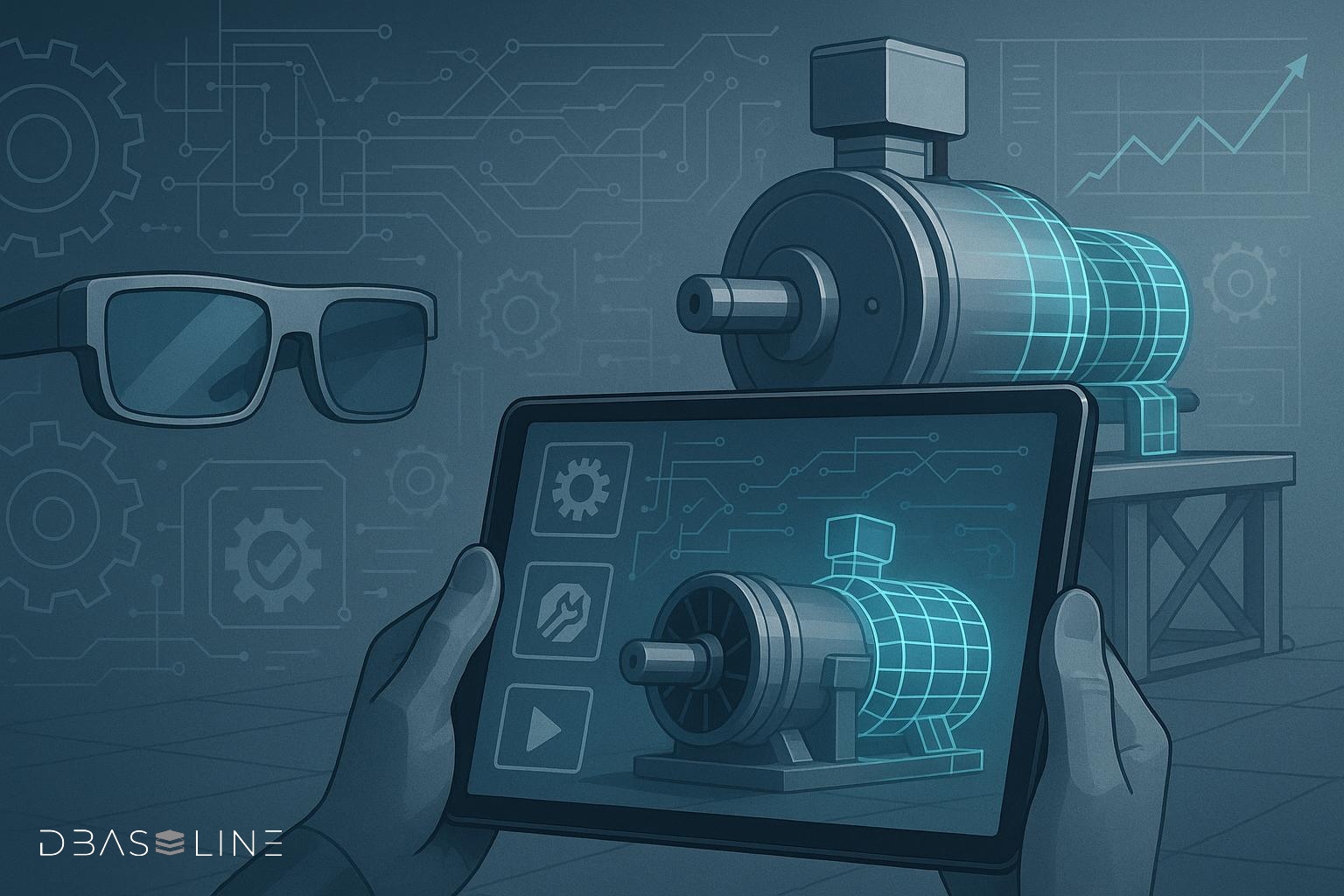
Augmented Reality is a technology that overlays digital information onto the real world, allowing operators to view data and instructions directly in their field of vision. Digital Twins are virtual replicas of physical assets that use real-time data to simulate the behavior and state of industrial equipment or processes. The combination of these technologies enables a more intuitive and informed interaction with industrial systems.
Applications in Industrial Inspection and Maintenance
The integration of AR and DT has revolutionized industrial inspection and maintenance practices. For example, a study published in MDPI Sensors in January 2025 details the development of a system that combines IoT, data analysis, AR, and DT for monitoring and maintenance of industrial equipment. This system allows operators to be alerted to anomalous conditions and provides detailed visual instructions for maintenance tasks, significantly reducing machine downtime. ([mdpi.com](https://www.mdpi.com/1424-8220/25/3/845?utm_source=openai))
Benefits of Integrating AR and DT
The adoption of these technologies brings several benefits, including:
- Reduction of Downtime: The ability to quickly identify and resolve issues minimizes unplanned stoppages.
- Accuracy in Inspections: Real-time visualization of data and virtual models improves inspection accuracy.
- Operational Efficiency: Immediate access to relevant information and maintenance instructions optimizes operational processes.
- Cost Reduction: The decrease in errors and increased efficiency result in significant savings in maintenance costs.
Case Study: Implementation in a Smart Factory
A practical example of this integration is the "Smart Factory Digital Twin" project developed by Advanced Manufacturing Corp in 2024. This project created a comprehensive virtual replica of a manufacturing facility, integrating IoT data, machine learning algorithms, and 3D visualization. The results were impressive:
- 35% reduction in unplanned downtime.
- Real-time monitoring of over 500 production parameters.
- 94% accuracy in predictive maintenance.
- 25% improvement in overall equipment effectiveness.
These results demonstrate the significant potential of integrating AR and DT in industrial maintenance. ([inferstellen.com](https://www.inferstellen.com/projects/smart-factory-digital-twin?utm_source=openai))
Challenges and Considerations for Implementation
Despite the benefits, implementing these technologies presents challenges, such as:
- Initial Investment: Acquiring specialized hardware and software may require significant investment.
- System Integration: Compatibility with existing systems can be complex and require adaptations.
- Staff Training: Adequate training is necessary for operators to effectively use the new tools.
Overcoming these challenges is crucial to fully leverage the benefits offered by AR and DT.
Conclusion
The integration of Augmented Reality and Digital Twins is transforming industrial inspection and maintenance practices, offering greater efficiency, accuracy, and cost reduction. Although there are challenges in implementation, the potential benefits make this approach a valuable consideration for industries seeking innovation and continuous improvement.
Frequently Asked Questions
What is a Digital Twin?
A Digital Twin is a virtual replica of a physical asset that uses real-time data to simulate its behavior and state, allowing for precise monitoring and analysis.
How does Augmented Reality assist in industrial maintenance?
Augmented Reality overlays digital information onto the real environment, allowing operators to view data and instructions directly in their field of vision, facilitating inspections and repairs.
What are the main challenges in implementing AR and DT?
The main challenges include the initial investment in technology, integration with existing systems, and the need for adequate staff training.